Identifiers (continued)
There are two key and related questions about identifiers:
- What can be identified?
- What does the identifier identify?
What can be identified?
Nearly anything can be identified. If you can name it, you can "name it" with an identifier. Any thing can be identified, and anything is a thing.
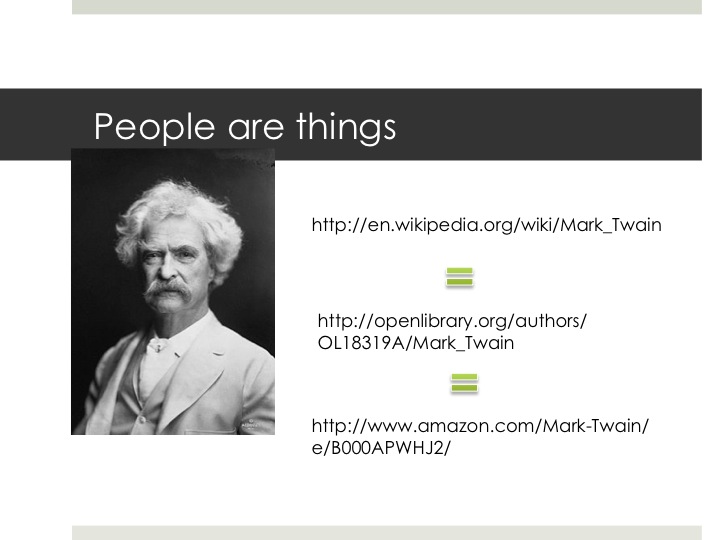
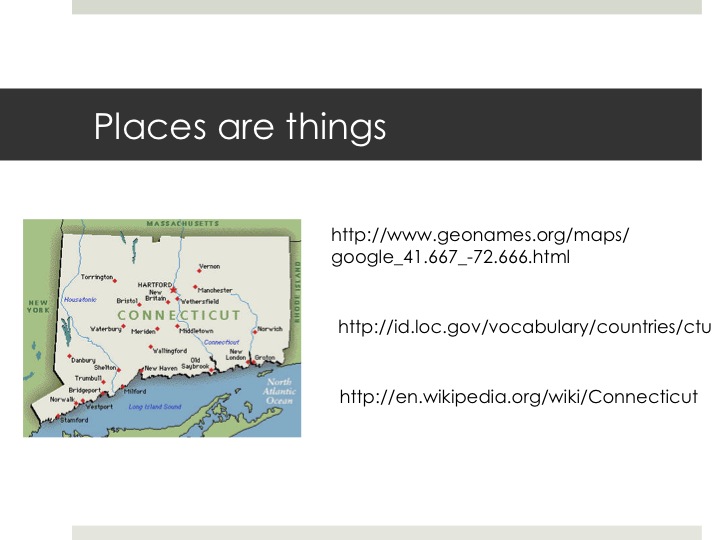
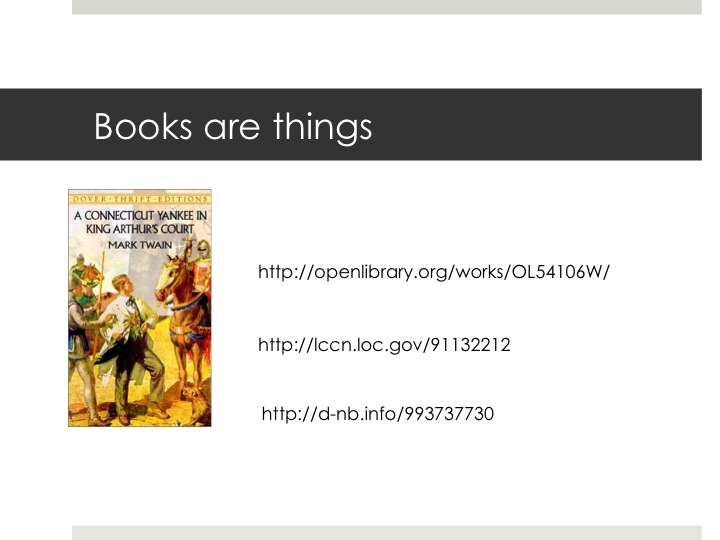
You will notice that each of these examples has more than one identifier. Although it would be ideal, perhaps, to have a single identifier for a single thing, the reality is that identification happens in a decentralized manner. No one has time to look too far to find existing identifiers, and in many cases communities or systems already have identifiers for their key things. While having multiple identifiers may require a bit more work, there are standards in place that allow you to make it clear when two or more identifiers stand for the same thing. Over time, the number of identifier systems may diminish as it become easier to locate and use existing identifiers.
What does identifier x identify?
This is the harder question. It is often ambiguous what an identifier actually identifies, and in some cases it remains ambiguous because of how the identifier was developed or because of the complexities of reality. Does the Wikipedia identifier for Mark Twain also identify Samuel Clemens? (It seems to, since both are included in that Wikipedia page.) What about the entry in the Virtual International Authority File? There is a separate entry for Samuel Clemens, but only used by two libraries among the contributors:


It therefore isn't exactly clear whether some libraries don't have anything by or about Samuel Clemens, or if some have combined the two "identities" into a single authority file entry.
In spite of this, the identifiers are useful for the reasons given above: they increase communication across languages, and they remain stable even when displays change.
